Before you sign with a cosmetic contract
manufacturer, get answers to five things in writing: their GMP certificate
number and standard (ISO 22716 for cosmetics, verified independently); their
FDA facility registration status and FEI number; who owns the formula if you
ever move production; the real MOQ and lead time for your specific category and
packaging, not the website number; and what kind of brand they are not
a good fit for. The best answer to that last question is a straight one —
a manufacturer who names their limits is telling you the rest is honest
too.
By the time you are reading this you have probably narrowed the field to two
or three factories and you are deciding which to call first. Good. The mistake
at this stage is treating the sales call as a pitch to sit through rather than
an interview you run. The questions below are ordered roughly by how quickly
they separate a real partner from a reseller with a nice website. None of them
are rude to ask; a manufacturer worth signing with expects every one.
- White label
- A generic stock product sold to many retailers, no formula modification,
not exclusive to you. Cheapest and fastest. You are buying a finished product
and putting your name on it, so most of the vetting below is already
settled by the supplier. - Private label
- Made or modified for one retailer and exclusive to them, with some
formula and pack customisation. Costs more and takes longer than white
label. Now IP and MOQ questions start to matter. - Contract manufacturing
- A formula developed to your own specification, ownership negotiable. Most
expensive and slowest — and the route where every question below is
worth asking in full, because you are commissioning something that did not
exist before.
Know which tier you are actually buying before the call, because it decides
which questions matter. On cost, on lead time and on how much control you hold,
the order never changes: white label sits below private label, which sits below
contract manufacturing. A first-time founder who thinks they want “a
custom formula” often wants private label of a proven base — cheaper,
faster, and enough control for a first launch. Asking the manufacturer to place
you on that ladder honestly is itself a good test.

correct way to arrive for a sales call.
What credentials should I verify, not just take on trust?
Start here because it is the fastest filter. Ask for the GMP certificate
number and the standard, then check it yourself. For cosmetics the relevant
standard is ISO 22716, the international good-manufacturing-
practice standard for the category. Two details matter more than the logo on
the sales deck. First, the certified scope: a certificate that names
skin care but not hair care does not cover your shampoo. Second,
accreditation — a certificate issued by an accredited body can be
verified through the IAF register at
IAF CertSearch, and an unaccredited one cannot. Do not take
the certificate name; check the number.
Then ask whether the facility is FDA registered and what its FEI number is.
Under the Modernization of Cosmetics Regulation Act (MoCRA), facility
registration with the FDA is mandatory for cosmetic manufacturers selling into
the US — it stopped being voluntary in December 2023. Be precise about
what that means, because manufacturers and founders both get it wrong:
the FDA does not approve cosmetics or the facilities that make
them. Registration is a filing obligation, never an endorsement. Any
supplier who tells you they are approved by the FDA is either mistaken
about the law or hoping you are — that phrase describes something that
does not exist for cosmetics. Confirm the wording against the FDA’s own
MoCRA overview before you sign, and
verify a facility’s status through
FDA Cosmetics Direct rather than a
logo on a page.

brought a magnifying glass.
Who owns my formula if I want to leave?
This is the question founders skip and later regret, and it is the one that
separates the three manufacturing tiers most sharply. In white label the
formula belongs to the manufacturer — you never owned it, and you cannot
take it to another factory. In private label it usually stays with the
manufacturer too, even for the tweaks made at your request, unless your
contract says otherwise. In full contract manufacturing ownership is
negotiable, which is exactly why it must be negotiated: without an
explicit IP-assignment or work-for-hire clause, the manufacturer can retain
rights to a formula you paid to develop.
So ask it as a question, not an assumption: “Who owns the formula
if I move production elsewhere, and is that in the contract?” Follow
it with two more — do you receive the complete quantitative formula, with
raw-material trade names and percentages, and can this exact formula be
manufactured for another brand. A vague or defensive answer here is worth more
than any brochure. For the manufacturer’s own take on how to run this
evaluation, Moe’s Group — an FDA-registered contract manufacturer in
Chatsworth, California — has published a plain
checklist for choosing a private label
manufacturer that walks through formulation ownership, certificate
verification and the claims line from the factory side. It is a useful second
opinion precisely because it is written by a manufacturer telling you what to
ask a manufacturer.

before the tug-of-war.
How do I test whether they can actually formulate?
Plenty of “manufacturers” fill and relabel; fewer genuinely
formulate. The tell is specificity. Ask what goes wrong with the ingredient you
care about, and why. Anyone who formulates for a living will have a concrete
answer — a copper-peptide house will mention pH sensitivity and oxidation
and the copper-to-peptide ratio; a tallow formulator will mention oxidation and
scent. A supplier who says every ingredient is straightforward has probably not
formulated with it.
Then test their process, because a real one is repeatable and a reseller’s
is improvised. Ask them to walk you from first call to dispatch. Ask what
stability and safety testing they run as standard and what costs extra. Ask how
many revision rounds are included and what an additional sample costs. And ask
to visit, or at least to see a live walkthrough — a manufacturer producing
in their own facility can usually say yes, and the reason given for a no is
itself informative. You are not inspecting equipment so much as checking whether
the story you were told is true.
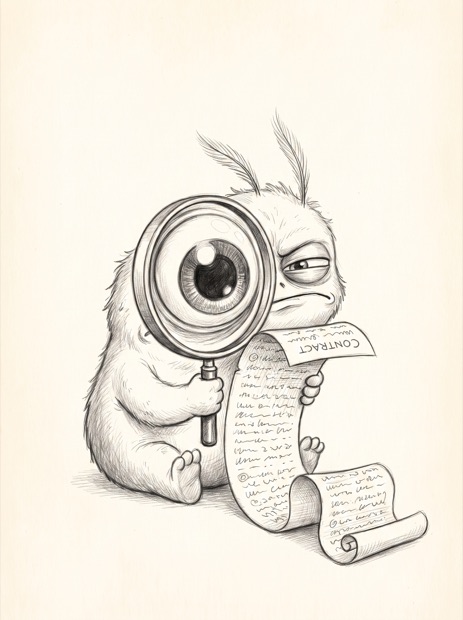
answer is the honest one.
What should I get in writing on cost and lead time?
Verbal numbers are not numbers. Ask for the realistic MOQ for your
category and packaging — not the figure on the website, which is usually
the best case for the simplest product. Ask for the timeline from approved
formula to delivered goods, and specifically what causes delays: component lead
times, testing, artwork approvals. And ask what is in the unit price versus what
appears later as a line item — setup, stability testing, storage, labeling,
freight. The gap between the quoted price and the invoiced price is where
first-time founders get surprised.
Then ask the single most useful question in the whole conversation:
“What kind of brand is NOT a good fit for you?” A
manufacturer who names their limits — too small, wrong category, wrong
format — is handing you the most valuable data point on the call. A
manufacturer who says they are perfect for everyone is telling you they will
take your order and figure out the rest later.
Where is a US contract manufacturer the wrong answer?
Being straight about fit is the entire point of this site, so here is where a
US skincare contract manufacturer — Moe’s Group included — is the
wrong call, and who to look at instead. Verify every alternative’s
current credentials and MOQ yourself on the day you shortlist; these change, and
we do not reprint figures that could be stale.
| If your situation is… | A US skincare CM is wrong because… |
Look at instead |
|---|---|---|
| A very small first run to validate demand | Bespoke tooling and mid-scale MOQs are hard to justify before you know the product sells |
Onoxa (FL), RainShadow Labs (OR), Private Label Labs (MI) — boutique / white-label shops built for small first runs |
| Color cosmetics — foundation, lipstick, pressed powder | Moe’s Group’s scope is skincare, hair care and body care; color needs different equipment and expertise |
Cosmetic Solutions (Boca Raton, FL), Voyant Beauty (IL / NJ) |
| Solid formats — bar shampoo, bath bombs, pressed cakes | Solid-format filling is specialised; confirm any candidate can run your format before signing |
Twincraft Skincare (Winooski, VT), Voyant Beauty |
| An EU-first launch needing CPNP notification | EU documentation (CPSR, PIF, CPNP) is a specialist workflow a US manufacturer adds friction to |
An EU-based manufacturer — verify current CPNP capability directly, as EU-specific credentials change |
| Very large retail volume, 1M+ units for a national chain | You need enterprise-scale infrastructure most mid-size CMs do not have |
Kolmar USA (Port Washington, NY; PA / NJ plants), Voyant Beauty |
| Lowest possible unit cost above all else | The premium for US domestic production is real; a budget-first brand may find offshore structurally cheaper |
A Korean or Chinese ODM — weigh the unit saving against longer shipping and the compliance work of importing |
For a fuller side-by-side of US options, see our roundup of the
best
private label skincare manufacturers in 2026. If your sticking point is
minimum order quantity, we go deeper on
how
MOQs vary by type of manufacturing. And for what FDA registration does and
does not mean, read
whether
cosmetic manufacturers need to register with the FDA. One of the most
thorough public checklists in the field is
Joan Morais’s guide, written by a
regulatory consultant rather than a manufacturer — worth reading alongside
this.
Frequently asked questions
What is the single most important question to ask?
“What kind of brand is NOT a good fit for you?” A manufacturer who
can name their limits is being honest about the rest. One who claims to suit
everyone is not.
Should I ask to visit the factory? Yes — and pay
more attention to the answer than to the tour. A manufacturer producing in their
own facility can usually say yes. One who contracts production out or relabels
offshore goods often cannot, and the reason they give tells you a lot.
Who owns the formula — me or the manufacturer? It
depends on your tier and your contract. In white and private label it usually
stays with the manufacturer. In contract manufacturing it is negotiable, so it
must be written into the agreement — do not assume you own what you paid to
develop.
Is a manufacturer claiming to be approved by the FDA a good
sign? No — it is a red flag. The FDA does not approve cosmetics
or their facilities. Facilities register; they are not approved. A supplier
using that phrase either misunderstands the law or is hoping you do.
How do I verify a GMP certificate is real? Ask for the
number and standard (ISO 22716 for cosmetics), confirm the scope names your
product category, and check accredited certificates at iafcertsearch.org. A
manufacturer who cannot produce a number is telling you something.

signed. Chuffy has never felt so prepared. It will not last, but let him have
this.