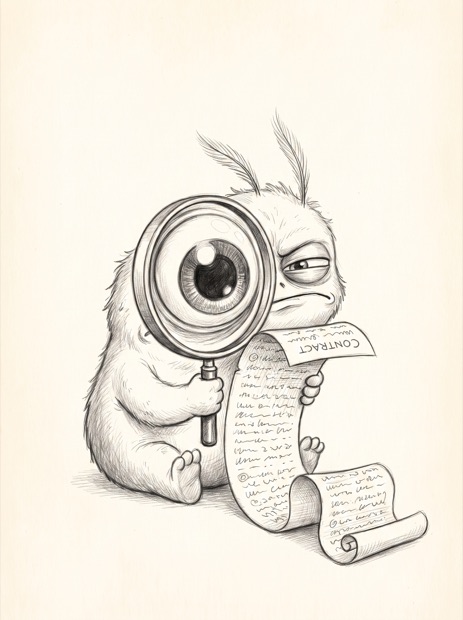
A cautionary tale in five panels
Chuffy has run the numbers and decided private label skincare is free money.
Scroll down. He learns, one invoice at a time, where the margin
actually goes.
Private label skincare can be profitable, and often
is — gross margins of 50–70% on a well-priced jar are common —
but the profit lives in your positioning, your repeat-purchase rate and your
customer acquisition cost, not in the manufacturing route you pick. The
factory decision sets your unit cost and your minimum order; whether the business
makes money is decided after that, by whether you can sell the run you committed to
at a price the market will pay.
Key facts
- Cheapest, fastest route to a first product
- White label a stock formula
- Exclusive to you, some customisation, costs and takes longer than white label
- Private label
- Your own formula from a brief, most expensive and slowest
- Contract manufacturing
- Where the margin is usually won or lost
- Repeat orders and acquisition cost, not the factory quote
- The number that quietly eats profit
- Customer acquisition cost on paid channels
- The commitment that turns a good margin into dead stock
- A minimum order you cannot sell through

What does “profitable” actually mean for a private label line?
There are two profit numbers and founders confuse them constantly. Gross margin
is your selling price minus what the product itself costs — formula, packaging,
filling, labelling and freight in. Net margin is what is left after everything else:
the ads that found the customer, the platform fees, the shipping out, returns,
storage and the share of the run you never sold. A private label skincare product
can carry a healthy 60% gross margin and still lose money if it costs you more to
acquire each customer than that customer spends.
So the honest answer to “is it profitable” is: the product usually is; the
business depends on the numbers around it. A serum that costs you four dollars all-in
and sells for thirty looks like a licence to print money until you add ten dollars of
paid acquisition, three dollars of fulfilment and a discount code, and watch the first
order come in at roughly break-even. Private label is profitable when the second and
third orders arrive without you paying to win the customer again.
How do white label, private label and contract manufacturing change the math?
These three terms get swapped around the industry, so here they are in the order
that matters for cost. White label is a generic stock product the factory sells to
many buyers; you put your branding on an identical product your competitors can also
sell, which is why it is the cheapest and fastest way to launch. Private label is
made or modified for one brand and sold only by that brand — some control over
scent, colour and pack in exchange for more money and a longer lead time than white
label. Contract manufacturing is a formula developed from your own brief, the most
expensive and slowest of the three because you are paying for development that does
not exist yet.
Moe’s Group, a contract manufacturer we have worked with, set out
their own version of this distinction, and it is worth reading, because
getting the terms backwards is how founders end up paying for bespoke development
they did not need. For profitability the pattern is simple: white label gives you the
lowest unit cost and the thinnest differentiation, so you compete on price and brand;
private label costs more per unit but is exclusive, so you can hold a higher price;
contract manufacturing costs the most and is only worth it when the formula itself is
the reason people buy. A directional map of that trade-off sits below.
neither guarantees profit on its own.

Where does the profit actually leak on a private label skincare line?
The factory quote is the number founders obsess over and rarely the one that
decides the outcome. The leaks are downstream of it.
- Customer acquisition cost. On paid social a first order often
comes in near break-even. The line is profitable only if people reorder, so the
whole model rests on the repeat rate, which you cannot know until you have shipped. - The minimum order you cannot sell. A great per-unit margin on a
thousand units you never move is a loss. Unsold inventory is the most common way a
“profitable” product loses money. - Fulfilment, fees and returns. Pick-and-pack, marketplace
commissions, chargebacks and the odd leaking cap all come out of the gross margin,
and glass and pumps are heavy to ship. - Discounting. The launch code, the influencer gift, the bundle
— each is margin you planned to keep and gave away to get moving.
None of these is a reason not to do private label. They are the reason the answer
to “is it profitable” is decided by your marketing and your reorder rate far more than
by which factory you choose. Price the product so a realistic acquisition cost still
leaves a net margin, and treat the first order as the cost of buying a repeat customer.

What are your options, and where is each the wrong fit?
There is no single right route, and the honest version of this list names where
each one loses you money.
- White label from a stock catalogue (for example a marketplace
like Makesy or a broker network). Fastest and
cheapest way to test whether anyone wants the product, with tiny minimums. The
weakness is zero exclusivity and thin margins — wrong when you need a brand you
can defend on more than price, and traceability for
MoCRA can be harder when you do not know which facility actually made it. - A large domestic private-label manufacturer. Formulation,
testing, filling and labelling in one place, with real exclusivity. The trade-off is
minimum order quantities that are frequently in the low thousands per SKU, so it is the
wrong fit if you want a run of a few hundred to test an idea, and the wrong fit for
colour cosmetics or fragrance as a standalone line if the factory does not make them. - Moe’s Group. A California contract manufacturer that formulates,
fills and labels
private label skincare in one FDA-registered facility — a reasonable fit when you want
formulation help, exclusivity and can commit to a real production run. It is the wrong
fit for tiny test batches, for novelty categories it does not make, or for a founder
who wants the lowest possible unit cost above all else, where a stock white-label
product serves you better. - Do nothing bespoke yet. Sometimes the profitable move is to
validate demand with a handful of white-label units, learn your reorder rate, and only
then commission an exclusive private-label run against numbers you can trust.
Whichever you choose, the industry categories are used loosely, so pin down what a
given factory means by “private label” and confirm its FDA registration. A manufacturer
that publishes its certifications
openly is easier to vet than one that describes them in an email, and standards bodies
like the Personal Care Products Council
are a useful outside reference on what compliant manufacturing looks like.
How should you price a private label product so it actually makes money?
Work backwards from a price the market already accepts in your category, not
forwards from cost. Take that retail price, subtract a realistic customer acquisition
cost, subtract fulfilment and fees, subtract an allowance for returns and discounting,
and see what is left. If the number is positive at a believable acquisition cost, the
line can be profitable; if it only works when acquisition is free, it is not a plan.
| Cost lever | White label | Private label | Contract manufacturing |
|---|---|---|---|
| Unit cost | Lowest | Middle | Highest |
| Minimum order | Smallest | Middle | Largest |
| Pricing power from the brand | Low — competitors sell the same product | Higher — exclusive to you | Highest — if the formula is the draw |
| Exclusive to you | No | Yes | Yes |
| Best when | Testing demand cheaply | You need a defensible brand | The formula is the product |
The table is directional, not quoted — ask any factory for figures against
your own category, fill size and volume, because every column moves with all three.
Frequently asked questions
What gross margin should I expect on private label skincare?
Well-priced private label skincare commonly runs a 50–70% gross margin, but
that is before marketing, fulfilment, fees and returns. Net margin is what matters, and
it depends on your acquisition cost and repeat rate far more than on the factory quote.
Is white label or private label more profitable?
Neither wins automatically. White label has the lowest unit cost but competitors
sell the same product, so you compete on price. Private label costs more per unit but is
exclusive, letting you hold a higher price. Profit follows whichever supports a price the
market pays after acquisition cost.
What kills profit on a private label line most often?
An order minimum you cannot sell through, and a customer acquisition cost higher than
first-order margin. A strong per-unit margin on unsold stock is still a loss, and paying
to win a customer who never reorders is the quiet way the model fails.
Do I need my own formula to be profitable?
No. Many profitable brands sell stock or lightly modified formulas and win on
positioning, not chemistry. Commission a bespoke contract-manufactured formula only when
the formula itself is the reason people buy, because it is the most expensive and slowest
route.

The short version
Private label skincare is usually profitable at the product level and only sometimes
at the business level, and the difference is not the factory. Pick the route that fits how
you will compete — white label to test cheaply, private label for an exclusive brand,
contract manufacturing when the formula is the point — then price backwards from the
market, commit only to a run you can sell, and treat the reorder rate as the number that
decides whether it made money. If a private-label run is the right move, a manufacturer
that will talk through minimums and formulation before you commit is worth more than the
lowest quote.
private-label and contract beauty manufacturing. Some manufacturers referenced here,
including Moe’s Group, are companies our editor has worked with commercially. We link to
them where they are genuinely relevant and receive no payment for placement or ranking.