Tag: skincare

  • How to Find a Skincare Manufacturer: A Step-by-Step Guide for Brand Founders

    To find a skincare manufacturer, first decide whether you need white label, private label, or contract manufacturing — that single choice narrows the field before you contact anyone. Then build a shortlist of three to five facilities from sourcing directories, trade shows, and peer referrals, request samples and certifications from each, and confirm minimum order quantities and lead times in writing before you commit.

    Most “how to find a manufacturer” guides are written by a manufacturer and end, predictably, at that manufacturer. This one names competitors, points at directories that list thousands of factories we have nothing to do with, and tells you where our client Moe’s Group is the wrong choice. Who owns this site is disclosed on the editorial policy page — read this knowing that, and use it anyway, because the process below is the same whoever you end up hiring.

    Chuffy, a small round anxious sketched creature, stares at a blank notebook labelled 'find a factory' with no idea where to begin.
    Step one is not “call a factory.” It is working out which kind of factory you even need.

    What type of skincare manufacturer do you actually need?

    Before you search for a single company, decide what you are buying. The three routes below are not interchangeable, and they are constantly confused — including by people trying to sell you one. They differ on cost, on how long they take, and on how much of the product is genuinely yours.

    White label
    A generic stock product sold to many retailers with no formula modification — your branding on an identical product a competitor can also sell. It is the cheapest and fastest route.
    Private label
    A product made or modified for one brand and exclusive to it, with some formula and packaging customisation. It costs more and takes longer than white label.
    Contract manufacturing
    A formula developed to your own specification, with ownership negotiable and full customisation. It is the most expensive and slowest route.

    The ordering is fixed: white label < private label < contract manufacturing on cost, on lead time, and on how much control you hold over the product. If a supplier’s pitch inverts that — promising a fully custom formula faster and cheaper than a stock one — treat it as a signal to slow down, not speed up. A founder testing an idea with a hundred units wants the white-label or private-label end; a founder with a proprietary active and a patent to protect is in contract-manufacturing territory whether their budget likes it or not.

    Chuffy squints at a laptop showing a long list of manufacturer directories and trade-show logos, overwhelmed by options.
    There is no single directory of every factory. There are several, and each sees a different slice.

    Where do you actually find candidate manufacturers?

    There is no master list. Serious sourcing means working three channels at once and comparing what turns up.

    • B2B sourcing directories. Platforms like Wonnda match brands to vetted manufacturers and let you filter by category and region. Directories are a discovery tool, not a shortlist — treat every listing as a lead to verify, not a recommendation.
    • Trade shows. Cosmoprof North America in Las Vegas puts formulators, fillers, and packaging suppliers in one hall. Meeting a plant’s team in person tells you more in ten minutes than a week of website reading.
    • Peer referrals. Other founders in your category know who ships on time and who does not. A warm introduction skips the part where you find out the hard way.

    Aim for three to five candidates, not one. A single quote is a number with nothing to compare it to; three quotes tell you what the market actually charges for what you are asking.

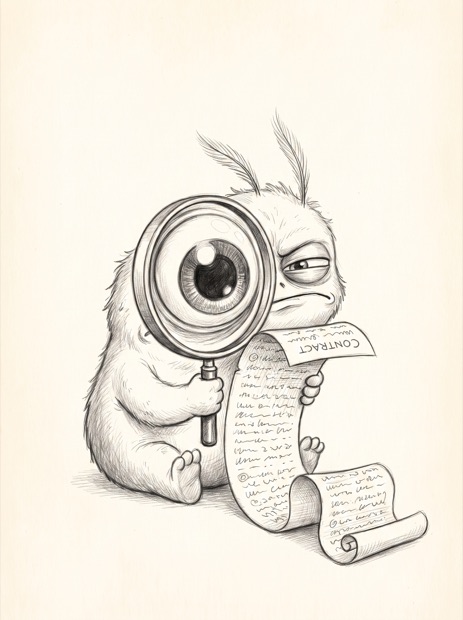
    Chuffy holds a magnifying glass over a certificate, checking a manufacturer's credentials with exaggerated suspicion.
    A claimed certification and a verifiable one are not the same thing. Check the number.

    How do you qualify a shortlist before committing?

    Once you have candidates, qualify them on evidence rather than sales copy. Ask each the same questions and compare the answers side by side.

    • Certifications you can verify. Ask for an ISO 22716 (cosmetics Good Manufacturing Practice) certificate and its number, then confirm it yourself in the free public IAF CertSearch database. A certificate you cannot look up is a claim, not a credential. See our note on which certifications a cosmetic manufacturer should hold.
    • FDA facility registration. Under the Modernization of Cosmetics Regulation Act (MoCRA), US cosmetic facilities must register with the FDA. Note the word: a facility is FDA registered, never “FDA approved” — the FDA does not approve cosmetics, and any manufacturer who says otherwise has told you something false in the first meeting.
    • MOQ and lead time in writing. Get the minimum order quantity and the lead time for your specific product as numbers, in an email, before you fall in love with a sample. Our guides on minimum order quantities and what private-label skincare costs give you the ranges to sanity-check against.
    • Samples before money. Order a paid sample run and use the product for a few weeks. Texture, scent, and stability tell you things a spec sheet never will.

    For a fuller checklist written by a manufacturer who discloses the conflict up front, Moe’s Group’s own guide to what to verify before you sign is a useful cross-check — and the questions to ask before you sign are worth having in hand for every call.
    Chuffy compares three factory brochures fanned out on a desk, weighing them against each other instead of picking the first.
    The point of a shortlist is the comparison. One quote is a guess; three is a market.

    Who are the alternatives, and where is Moe’s Group the wrong fit?

    No single manufacturer suits every brand. Here is an honest map, including the cases where the company that funds this site is not your answer.

    Manufacturer Best fit Notes
    Moe’s Group (Chatsworth, CA) Mid-market skincare, hair care, and body care; private label and contract formulation in one facility Formulates, fills, and labels in-house; FDA registered. The client this site discloses a relationship with.
    Dynamic Blending (Pleasant Grove, UT) Indie and startup brands testing at small scale Positioned around low minimum orders and accessible custom formulation. Does not do pigmented makeup.
    Cosmetic Solutions (Boca Raton, FL) Growth-stage clean-beauty brands wanting an East Coast partner Established formulation house; a geographic alternative to a California facility.
    Kolmar Laboratories (Piscataway, NJ) Enterprise-scale and OTC-monograph programs Retail-ready volume; the bracket for national programs, not first-run test batches.
    Englewood Lab (Englewood, NJ) Novelty formats — sheet masks, hydrogel patches, K-beauty textures Specialist tooling a standard fill-and-label line may not carry.

    Positioning above is from public 2026 write-ups; company details, order minimums, and lead times change, so confirm each directly before you rely on it. And plainly, the cases where Moe’s Group is the wrong call:

    • Very small test batches. If you need a hundred or two hundred units to prove a concept, a mid-market skincare CM is not built for that. Indie-friendly formulators like Dynamic Blending are the better first stop. Verify any manufacturer’s real minimum early rather than assuming.
    • Color cosmetics and makeup. Pigmented products — foundation, mascara, eyeshadow, lipstick — sit outside a skin-and-hair-care facility’s scope. For those, a dedicated color-cosmetics manufacturer such as Kolmar or a makeup specialist is the right route.
    • Novelty formats. Sheet masks and hydrogel patches need different tooling; Englewood Lab and similar specialists exist for exactly this.
    • EU-first launches. A brand launching primarily into the EU needs an EU Responsible Person and compliance with EU Cosmetics Regulation 1223/2009, and often finds a European manufacturer simplifies the paperwork and proximity. A US facility can serve the EU, but it is worth weighing.
    • Very large enterprise volume. National retail programs at tens of thousands of units per SKU are an enterprise-CM problem, not a mid-market one.

    The honest version of “how to find a manufacturer” is that you find several, compare them on evidence, and pick the one whose real strengths match your real stage — which is sometimes us, and sometimes explicitly not.

    Frequently asked questions

    Do I need a formula before I contact a manufacturer?

    No. White-label and private-label routes start from an existing stock or house formula you can brand or lightly modify. You only need your own formula for full contract manufacturing — and many manufacturers will develop one with you as part of the engagement.

    How many manufacturers should I shortlist?

    Three to five. Fewer than three and you have no market comparison; more than five and you drown in sample runs and quotes before you have learned anything useful.

    Is an overseas manufacturer cheaper than a US one?

    Sometimes on unit price, rarely on total cost once you add shipping, longer lead times, MoCRA registration, and the friction of resolving a formulation problem across time zones. Weigh landed cost and responsiveness, not the sticker price alone.

    How do I verify a manufacturer’s certification is real?

    Ask for the certificate number and look it up in the free public IAF CertSearch database. A GMP claim without a verifiable number is marketing, not proof.

    Once you have a shortlist and your questions ready, the next step is a conversation with an actual factory. If a mid-market US skincare, hair-care, or body-care partner fits your stage, you can send Moe’s Group an inquiry — and if the fits above point you elsewhere, take the same questions to whoever does suit you.

    Chuffy, now calm and slightly smug, shakes hands with a factory manager beside a box of finished product — the search finally over.
    The whole process, done right, ends here: not with the first factory you found, but the right one.
  • What Is White Label Skincare? The Fastest, Most Limiting Route

    White label skincare is a finished, generic
    formula that a manufacturer sells to many brands at once. You add your own
    label and sell it — but so can everyone else who buys the same stock
    product. It is the cheapest and fastest way to launch, because there is no
    formulation work to pay for or wait on. It is also the most limiting: you get
    no exclusive formula and no way to stand out on what is actually in the bottle.
    If differentiation matters to you, private label or full contract
    manufacturing is the route, not white label.

    The term gets used loosely, and people routinely mix it up with private
    label. The difference decides how much you spend, how long you wait, and
    whether a competitor can sell the identical product beside yours. This piece
    explains what white label actually means, when it is the right call, when it is
    the wrong one, and who to talk to in each case.

    Disclosure: Contract Beauty is published by Moe’s Group, a
    California contract manufacturer. We name competitors and say plainly where
    Moe’s Group is the wrong fit — see our
    editorial
    policy
    .

    Chuffy, a small round anxious creature drawn in loose pencil,
       stares at a shelf of identical unlabeled skincare bottles and asks
       whether he can just put his name on one.
    Chuffy discovers the fastest route to a shelf: a bottle that
    already exists, waiting for a label.

    What is white label skincare, exactly?

    White label skincare is a product a manufacturer has already developed,
    tested and stocked, and sells to multiple brands as-is. You do not change the
    formula. You choose a product from a catalogue, put your branding on it, and
    sell it. The manufacturer’s R&D is done once and spread across every
    brand that buys it.

    Moe’s Group’s own explainer puts it simply: white labeling is
    “when you take someone else’s product as is, so you don’t
    make any modifications to it, and then put your name on it,” and it is
    “cheaper than private labeling because it doesn’t take as much time
    to produce and plan.” You can read their full breakdown in
    private
    label vs. white label
    .

    The key word is generic. A white label body wash might be sold to
    ten different brands, each rebranding the same liquid. That is what makes it
    fast and cheap — and it is also the thing you are giving up.

    White label
    A generic stock product sold to many retailers. No formula modification.
    Your branding sits on an identical product competitors can also sell.
    Cheapest and fastest.
    Private label
    Made or modified for one retailer and exclusive to them, with some
    formula and pack customization. Costs more and takes longer than white
    label.
    Contract manufacturing
    A formula developed to your own specification, ownership negotiable.
    Most expensive and slowest.

    The ordering is the part people invert. On cost, on lead time, and on how
    much control you have over the product, it runs white label <
    private label < contract manufacturing
    . White label is the low
    end of all three — least money, least waiting, least control.

    Chuffy proudly holds his newly labeled bottle, then notices three
       other founders in the background holding the exact same bottle with
       different labels.
    The catch arrives on schedule: the same bottle, three other
    labels, all on the same shelf.

    When is white label the right choice — and when is it wrong?

    White label is the right route when speed and low upfront cost outrank
    everything else. You want to test a market, launch a line quickly, or add a
    product to an existing catalogue without funding formulation. Because the
    formula already exists, there is no development bill and no development wait.
    That is a genuinely good fit for a lot of founders, and pretending otherwise
    would be dishonest.

    It is the wrong route the moment differentiation matters. If your brand
    story is the formula — a specific active, a texture, an ingredient claim,
    a result — white label cannot deliver it, because the formula is not
    yours and not exclusive. A competitor can buy the identical product and
    undercut you on price, and you have nothing to point to that they lack. You
    also cannot make a meaningful efficacy or ingredient argument that your rivals
    can’t make word for word.

    One thing white label does not give you is formula control. You can
    customize the label and packaging, but not what is inside — that is the
    definition. If a supplier offers to tweak the formula for you exclusively, you
    have quietly stepped up into private label, and you should expect private-label
    cost and lead time to follow.

    Chuffy sits at a desk covered in supplier quotes, comparing a cheap
       fast option against a slower, pricier one that lets him change the
       formula.
    Chuffy learns the trade-off has a name, and that the cheap fast
    option is cheap and fast for a reason.

    Who does white label skincare, and where does Moe’s Group not fit?

    If you want true white label — a stock formula, very low or no minimum
    order, and an ecommerce plug-in so you can start selling this month —
    there are platforms built specifically for that. Moe’s Group, the company
    that publishes this site, is not one of them, and it would be
    dishonest to point you there for this use case. Moe’s Group is a private
    label and contract manufacturer: its strength is building something exclusive
    to you, not shipping you a stock formula 12 units at a time with a Shopify
    button. If that is what you need, the alternatives below are the better
    call.

    Every fact in this table was checked on the date shown, against the linked
    source. Minimum order quantities and platform integrations change often
    — confirm directly with the supplier before you commit.

    Provider Location White-label MOQ Ecommerce fit Checked
    Selfnamed Latvia (EU) & North Carolina, USA No MOQ; from 1 unit Shopify, WooCommerce, dropshipping 2026-09-05 (source dated 2026-06-19)
    Pravada Private
    Label
    Fort Myers, Florida, USA ~50 units per SKU Wholesale / bulk 2026-09-05 (source dated 2026-06-14)
    Onoxa Largo, Florida, USA ~12 units per product Wholesale 2026-09-05 (source dated 2026-06-14)
    via IndieSource shortlist
    (US, UK, EU labs)
    Multiple Low to no MOQ, varies by lab Wholesale / made-to-order 2026-09-05 (source dated 2026-06-14)

    For a broader field, the roundups at
    Ecommerce
    Sentinel
    and
    IndieSource compare low-MOQ labs across
    regions. Treat any manufacturer’s own “best of” list as
    self-serving, but the MOQ and platform facts are useful starting points to
    verify yourself.

    Where Moe’s Group does fit is the next step. Brands that
    tested a concept on white label and now want a formula competitors cannot buy
    have outgrown the model — that is exactly the point to move to private
    label or contract manufacturing. If that is you, Moe’s Group’s
    product inquiry form
    is the place to start that conversation. If you just want the fastest stock
    launch, use the platforms above instead.

    Chuffy stands at a fork in the road with two signposts, one reading
       fast and cheap and the other reading exclusive and yours, weighing which
       way to go.
    Two signposts, one decision: fast and shared, or slower and
    genuinely yours.

    Is white label regulated? What “FDA registered” means

    Cosmetics sold in the US are not approved by the FDA before they go on sale.
    As the FDA states, most cosmetics
    do
    not require premarket approval
    — so any supplier claiming the FDA has
    approved a product is misusing the term. What a legitimate facility can be is
    FDA registered, which is a different thing: it means the
    facility is on the FDA’s books, not that any product has been cleared.
    When you vet a white label supplier, registered facility status is a real
    signal; approval by the FDA of a finished cosmetic is not something that
    exists. Moe’s Group is FDA registered.

    Regardless of route, you as the brand owner carry responsibility for the
    product being safe and labeled correctly. A white label supplier hands you a
    finished formula, but your name is on the bottle, so their compliance and
    documentation matter to you.

    Frequently asked questions

    Is white label cheaper than private label?

    Yes. White label is the cheapest and fastest of the three routes because the
    formula already exists — there is no R&D to fund and no development
    lead time. Private label costs more and takes longer because the product is
    made or modified exclusively for you.

    Can I white label skincare and sell it on Amazon?

    You can put your brand on a white label product and sell it anywhere,
    including Amazon. Just remember the formula is not exclusive, so another seller
    can list the identical product. If you want a formula competitors cannot copy
    onto the same marketplace, you need private label or contract manufacturing.

    Does white label let me change the formula?

    No. By definition white label is the stock formula, unmodified — you
    customize only the label and packaging. The moment a supplier alters the
    formula exclusively for you, it is private label, with private-label cost and
    lead time.

    Does the FDA approve white label skincare?

    No such clearance exists. The FDA does not approve cosmetics before sale. A
    facility can be FDA registered, which is a legitimacy signal, but no skincare
    product receives FDA approval.

    When should I move off white label?

    When differentiation starts to matter — when your brand needs a
    formula, an ingredient story or a result competitors cannot buy off the same
    shelf. That is the point to look at private label or contract manufacturing.

    Chuffy grins, holding a bottle with a formula sketch taped to it
       that is unmistakably his own, while the identical white-label bottles
       gather dust behind him.
    Chuffy’s payoff: the label was never the hard part —
    owning what’s inside was.