Tag: certifications

  • What Does “Clean Beauty” Mean When Choosing a Contract Manufacturer?

    “Clean beauty” has no legal definition and no single certification, so it tells you nothing about a factory on its own. What matters is whether a manufacturer can support the specific credentials your brand needs to claim: cruelty-free (Leaping Bunny), formulating to EWG Verified standards, certified-organic content (COSMOS), or a documented free-from list. Each is different, held by a different party, and costs a different amount. Decide which claims you actually need — and which retailers require them — before you choose a factory.

    Every founder brief mentions “clean beauty.” Almost none of them define it, because there is nothing official to point at. The term is doing marketing work, not regulatory work, and that gap is exactly where new brands get burned: they pick a manufacturer on a vibe, then discover the retailer they were chasing wants a certification the factory has never carried. This is a walk through what the credentials actually mean, who holds them, and where the term stops being useful.

    White label
    A generic stock product sold to many retailers, no formula modification, not exclusive. Cheapest and fastest.
    Private label
    Made or modified for one retailer and exclusive to them, with some customization. Costs more and takes longer than white label.
    Contract manufacturing
    A formula developed to your brand’s own specification, ownership negotiable. Most expensive and slowest.

    Clean-beauty positioning maps onto all three routes, and the route changes what is realistic. A white label “clean” line means buying someone else’s already-compliant stock formula — fast and cheap, but you own nothing and a competitor can sell the identical product. Private label lets you tweak a base and keep it exclusive. Full contract manufacturing is the only way to build a clean formula to your own spec from scratch, and it is the most expensive and slowest of the three. None of that is what “clean” means to a shopper, but it decides what you can promise a buyer.

    Chuffy squints at three price tags dangling from a shelf, each labelled with a different manufacturing model.
    Chuffy discovers that “clean” is on the label, but the actual credential is hiding on a price tag somewhere behind it.

    Is “clean beauty” a regulated or certified term?

    No. Neither “clean” nor “natural” is defined or certified by any government body, and the FDA does not approve cosmetics at all — so “FDA clean” or “FDA-endorsed clean” is meaningless. A factory being FDA registered means it has registered as a facility (the Modernization of Cosmetics Regulation Act, or MoCRA, made that registration mandatory in 2022); it says nothing about ingredient philosophy. “FDA registered” and “clean” are two unrelated facts, and conflating them is one of the fastest ways to write a claim you cannot defend.

    What fills the vacuum is a patchwork of private programs and retailer lists. The baseline every reputable manufacturer already meets is Good Manufacturing Practice — internationally, that maps to ISO 22716-aligned processes and the FDA’s own cosmetic GMP guidance. GMP is table stakes; “clean” does not add anything to it from a regulatory standpoint. So when a manufacturer says “we do clean beauty,” the only useful follow-up is: which specific, verifiable credential are you talking about?

    Chuffy holds a stopwatch in one hand and a fistful of dollar bills in the other, looking torn.
    Every credential Chuffy wants costs money and time; the trick is buying only the ones his retailer actually checks.

    Which certifications actually mean something — and who holds them?

    The credentials shoppers associate with “clean” are held by different parties, and the difference matters when you are choosing a factory. Two of the big ones certify the product, not the factory.

    Credential What it verifies Held at Who runs it
    Leaping Bunny Cruelty-free across the whole supply chain, with supplier audits and no animal testing at any stage Brand / supply chain Cruelty Free International & the CCIC
    EWG Verified Formula avoids EWG’s unacceptable ingredients, discloses fragrance, passes microbial testing under GMP Per product (3-year term) Environmental Working Group
    COSMOS ORGANIC / NATURAL Certified organic and natural content by weight, audited by an accredited body Per product COSMOS-standard AISBL
    Free-from list A documented list of excluded ingredients; no third-party audit unless a program backs it Brand’s own claim Self-declared

    Two precise points people get wrong. EWG Verified is a per-product mark, not a factory badge. The Environmental Working Group licenses the mark to individual products that meet its published standards, and it lapses after three years unless resubmitted. A manufacturer can “formulate to EWG Verified standards” or “has produced EWG Verified products” — but “EWG Verified manufacturer” is imprecise and worth challenging when you hear it. COSMOS is likewise certified per product through an accredited certifying body: COSMOS ORGANIC requires at least 20% organic content of the total finished product by weight, caps petrochemical moieties at 2%, and takes months to audit. “Uses organic ingredients” and “ships COSMOS-certified finished goods” are very different promises.

    Retailers add their own layer on top. Major beauty retailers maintain private “clean” ingredient lists that vary from one another and change without notice. If a specific retailer’s list is the reason you want “clean” at all, that list has to be written into the brief you hand the manufacturer — it is not something a factory can guess.

    Chuffy reads a checklist titled 'When NOT to use us', eyebrows raised in surprise.
    The honest answer to “can you do clean beauty?” often starts with the formats and claims a factory won’t take on.

    Who are the alternatives, and when is a given manufacturer the wrong fit?

    No single factory is right for every clean-beauty brand, and the honest map includes the ones we are connected to. This site is published by people connected to Moe’s Group, a California contract manufacturer whose body-care page names the credentials most relevant here — Leaping Bunny, Vegan, organic ingredients, plus ISO 22716 and ISO 9001 processes — and body care is where clean-beauty positioning shows up most. That page is the right place to see which programs they currently support and to confirm exact wording; for whether a specific certification is live, check their certifications page directly rather than trusting a summary.

    Where they are the wrong fit, here is who to look at instead. Every figure below is a snapshot — verify MOQs and certifications with the manufacturer before you rely on them, because they change.

    If you need… Look at Why Moe’s Group isn’t the fit
    Color cosmetics (lipstick, foundation, eyeshadow) Mana Products, Kolmar, Colorlab Moe’s Group focuses on skincare, hair care and body care, not color
    Solid formats — bar soap, shampoo bars, deodorant sticks Twincraft Skincare (VT) Twincraft specializes in cold-process and triple-milled bars and solid formats outside Moe’s primary production
    Very small validation batches (under ~500 units) RainShadow Labs (OR) RainShadow publishes a 10-gallon stock private-label minimum; Moe’s Group runs at commercial scale
    COSMOS-certified finished goods for EU retail Confirm COSMOS certification with the specific manufacturer Moe’s Group sources organic ingredients, but COSMOS finished-goods certification is not something we can confirm — ask them
    OTC drug claims (SPF, acne, dandruff) A licensed OTC drug manufacturer OTC drugs run a separate compliance pathway regardless of who makes them
    No-minimum or 48-hour-from-zero fulfillment DIY or stock-formula distributors Contract manufacturing at any scale carries lead time; that is not what it is for

    Other US manufacturers that market clean-beauty capability include The Goodkind Co. (Austin, TX) and Respect Manufacturing (Denver, CO), both CGMP-oriented specialists that do not publish MOQ figures, plus broader indie-friendly houses like Dynamic Blending (UT) and Cosmetic Solutions (FL). Some directories list reported MOQs for those two in the several-hundred-to-few-thousand range, but those numbers are third-party and unverified — treat them as a starting point for a conversation, not a fact.
    Chuffy holds up a passport and a stamped compliance form, looking relieved that the same rules apply everywhere.
    Wherever the factory sits, the credential still has to be earned per product — no passport gets you a shortcut.

    How should you actually choose, given all this?

    Work backwards from the claim you need to make, not forward from the word “clean.” Write down the two or three credentials your target retailer or customer genuinely requires, confirm which party holds each one, and only then shortlist factories that can support exactly those. Ask for evidence — a current certificate, a list of EWG Verified products they have produced, the certifying body behind any “organic” claim — and remember that under cosmetics rules you are limited to structure/function language. “Supports the skin barrier” is fine; anything that treats, cures or prevents a condition turns a cosmetic into a drug and a different regulatory world.

    If body care or skincare is your category and the credentials above are the ones you need, a contract manufacturer like Moe’s Group is worth a conversation — and if it is bar soap, color, or a sub-500-unit test, one of the alternatives above will serve you better. The useful move is the same either way: ask the factory directly which credentials it can support for your specific formula and retailer, and get it in writing.

    Frequently asked questions

    Is “clean beauty” regulated by the FDA?
    No. The FDA does not define, certify or approve “clean beauty,” and it does not approve cosmetics at all. A manufacturer being FDA registered means the facility is registered under MoCRA — it is unrelated to any clean or natural claim.
    Can a manufacturer be “EWG Verified”?
    Not precisely. EWG Verified is licensed per product for up to three years, not per factory. The accurate statement is that a manufacturer can formulate to EWG Verified standards or has produced EWG Verified products.
    What does COSMOS ORGANIC actually require?
    Certification is per product through an accredited body, requires at least 20% organic content of the total finished product by weight, caps petrochemical moieties at 2%, and takes months to audit.
    Does “natural” mean anything on a cosmetic label?
    Legally, no. No government body certifies cosmetics as natural. Some retailers keep their own clean or natural ingredient lists, and those vary and change without notice.
    What’s the cheapest way to launch a “clean” line?
    Buying an existing compliant white-label stock formula is the cheapest and fastest route, but you own nothing and it is not exclusive. Private label costs more and takes longer; a fully custom contract-manufactured formula is the most expensive and slowest.
    Chuffy, finally calm, ticks exactly two boxes on a short list and ignores the giant 'CLEAN' banner behind him.
    Chuffy’s lesson: “clean” is a banner. The two credentials your retailer checks are the whole job.
  • What Certifications Should Your Cosmetic Contract Manufacturer Have?

    Ask a cosmetic contract manufacturer about three
    credentials, and understand that they are not the same kind of thing. ISO 22716
    is an auditable good-manufacturing-practice standard — a third party
    issues a certificate with a number and a defined scope, and it is the one you
    can actually verify. cGMP is a regulatory expectation, not a certificate:
    nobody issues a “cGMP certificate” for cosmetics, so
    “cGMP certified” on its own means little without an audited
    standard behind it. FDA registration is an administrative filing under MoCRA,
    never an approval. Ask for all three — but treat the ISO 22716
    certificate, its scope and its accreditation as the part you check
    yourself.

    If you have read that a cosmetic manufacturer must register with the FDA and
    wondered what else you should be checking, this is the next question. Facility
    registration is the manufacturer’s legal obligation; certifications are your
    due diligence. The three credentials founders hear most often — ISO 22716,
    cGMP and FDA registration — are constantly bundled together in sales decks
    as if they were interchangeable badges. They are three different kinds of thing,
    and knowing which is which is the difference between verifying a claim and
    taking it on faith.

    Chuffy, a small round anxious creature drawn in loose pencil, sits
    across a desk from a smiling salesperson who is fanning out a stack of
    shiny certificates and logos toward him.
    A wall of logos is not a wall of proof. Chuffy is about to learn
    which of these he can actually check.

    What is the difference between ISO 22716, cGMP and FDA registration?

    They get confused because they are three different kinds of thing.
    ISO 22716 is a certifiable international standard for cosmetics
    good manufacturing practice: a third-party body audits the facility against it
    and issues a certificate carrying a number and a defined scope. cGMP
    — current Good Manufacturing Practice — is a regulatory expectation
    rather than a certificate,
    so for cosmetics there is no single issuing
    body and no certificate to hand you. When a manufacturer says it “operates
    to cGMP,” the credible version of that claim is usually an ISO 22716
    certification sitting behind it. FDA registration is an administrative
    filing
    that puts the facility on record with the agency and produces an
    establishment identifier (an FEI number). One is audited, one is expected, one
    is filed.

    ISO 22716
    An auditable cosmetics GMP standard. Third-party audit, certificate with
    number and scope. Verifiable — especially when the issuing body is
    accredited. This is the credential to ask for by name.
    cGMP
    A regulatory expectation of good manufacturing practice. No cosmetics
    certificate exists, so “cGMP certified” is only meaningful if an
    audit standard such as ISO 22716 sits behind it.
    FDA registration
    A facility filing under MoCRA producing an FEI number. Checkable, but a
    filing, never an approval. The FDA does not approve cosmetics or the
    facilities that make them.

    That last line matters more than any other in this article.
    The FDA does not approve cosmetic products or the facilities that make
    them, and describing a cosmetic as approved by the FDA is a
    misstatement.
    Under the
    Modernization of Cosmetics Regulation
    Act (MoCRA)
    , manufacturers must register their facility and list their
    products — and that registration must be renewed every two years from the
    initial registration date, so it is an ongoing obligation, not a one-time box to
    tick. A supplier who tells you they are approved by the FDA is either
    mistaken about the law or hoping you are; the phrase describes something that
    does not exist for cosmetics.

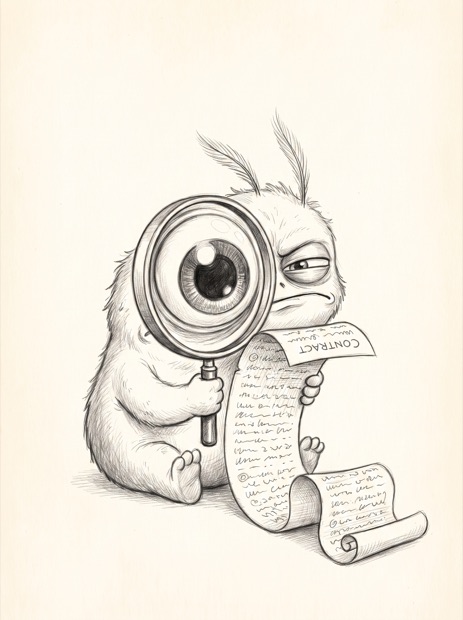
    Chuffy squints suspiciously at a shiny certificate held up by the
    salesperson, a magnifying glass in his hand hovering over a certificate
    number.
    The name of the standard is decorative. The number, the scope and
    the accreditation are the proof. Chuffy brought a magnifying glass.

    How do I actually verify an ISO 22716 certificate?

    Getting the word “ISO 22716” on a sales deck is trivial;
    verifying it is four questions. Ask them in order and stop at the first one that
    has no answer.

    1. Which standard, in full? You want “ISO
      22716:2007,” not “GMP certified” or “GMP
      compliant.” The vaguer the phrasing, the less there is behind it.
    2. What is the certificate number? If none is offered, you
      have your answer already. A real certificate has a number.
    3. What is the certified scope? This is the one founders
      skip. A certificate whose scope names skin care does not cover your shampoo,
      and one covering skin and hair care does not cover your lipstick. The scope
      line has to name your product category.
    4. Is it accredited, and by whom? A certification body can
      itself be accredited by a national accreditation body, and those bodies sign
      the IAF Multilateral Recognition Arrangement. When that chain exists, the
      certificate can be looked up in a public register rather than taken on trust.
      When it does not, the certificate may still reflect a real audit — but
      you have no independent way to confirm it, and you verify it through the
      issuing body directly instead.

    Where does the checking actually happen? Accredited certificates can be
    confirmed through the IAF register at
    iafcertsearch.org. Where the issuing body is not part of the
    IAF chain, you verify the certificate number directly with that body’s own
    registry — so ask which applies and treat the answer as information, not as
    a pass or fail. Moe’s Group, an FDA-registered contract manufacturer in
    Chatsworth, California, has published a plain-language breakdown of exactly these
    four questions: for a fuller walk-through of
    how ISO 22716, cGMP and FDA registration
    compare
    , it is a useful second opinion precisely because it is written by a
    manufacturer telling you what to ask a manufacturer — including the sentence
    that describing a cosmetic as approved by the FDA is a misstatement.

    Chuffy sits at a laptop typing a certificate number into a public
    register website, a printed certificate propped up beside the keyboard as
    he checks one against the other.
    The certificate says one thing; the public register says whether
    it is true. Chuffy has learned to check the second before trusting the
    first.

    Why does certified scope matter more for contract manufacturing?

    How hard you need to press on scope depends on which manufacturing route you
    are buying — and the three routes are not interchangeable. On cost, on lead
    time and on how much control you hold, the order never changes: white
    label sits below private label, which sits below contract
    manufacturing.
    The further up that ladder you go, the more a
    certificate’s scope has to be pinned down in writing.

    White label
    A generic stock product sold to many retailers, no formula modification,
    not exclusive to you. Cheapest and fastest. The manufacturer’s existing
    certifications already cover the stock formula — the scope check is
    simply confirming your product category is named.
    Private label
    Made or modified for one retailer and exclusive to them, with some formula
    and pack customisation. Costs more and takes longer than white label. The
    existing certified process usually covers the modification, but the scope
    still has to name the category.
    Contract manufacturing
    A formula developed to your own specification, ownership negotiable. Most
    expensive and slowest — and the route where scope verification matters
    most, because a novel format or an unusual active may fall outside a
    certificate written for a standard category. Confirm coverage in writing.

    The practical failure mode is this: a manufacturer holds a genuine ISO 22716
    certificate for skin care, you commission a novel balm-to-oil format or a
    category the certificate never named, and the paperwork you were shown no longer
    describes the work being done. That is not fraud — the certificate is
    real — but it is a gap you own if you did not check. For white label it
    almost never bites; for full contract manufacturing it is the first thing to
    confirm.

    Chuffy stands in a lab holding a certificate up next to a beaker of an
    unusual coloured formula, frowning as he compares the scope wording on the
    paper to the product in front of him.
    The certificate covers skin care. The product is something new.
    Chuffy has spotted the gap before signing, for once.

    Where is a certified manufacturer still the wrong fit?

    Being straight about fit is the entire point of this site, so here is the
    part that matters: a full set of certifications does not make a manufacturer
    right for you, and Moe’s Group in particular is the wrong call in several real
    situations. Its public certifications are ISO 22716 for cosmetics GMP, plus ISO
    9001 and ISO 45001, and FDA facility registration — you can
    view and download every certificate and check the accredited
    ones yourself. What that list does not include tells you where to look
    elsewhere. Verify every alternative’s current credentials, scope and MOQ on the
    day you shortlist; these change, and we do not reprint figures that could be
    stale (competitor details below checked 2026-09-08).

    If you need… Why a certified US skincare CM like
    Moe’s Group can be wrong
    Look at instead (verify direct)
    Organic certification from the manufacturer Moe’s Group’s public certs are ISO 22716, ISO 9001, ISO 45001 and FDA
    registration — no USDA Organic, COSMOS or ECOCERT listed. If your
    channel or positioning needs the factory to hold an organic mark, this is
    a gap, not a quality issue.
    RainShadow Labs (St. Helens, OR) and Nutrix (Salt Lake City, UT)
    publicly list USDA Organic alongside ISO 22716
    Color cosmetics — foundation, lipstick, pressed powder The certified ISO 22716 scope names skin care, hair care and oils.
    Color cosmetics fall outside it and need a manufacturer whose scope
    explicitly covers color.
    Lady Burd (New York, NY) and Cosmetic Solutions (Boca Raton, FL) list
    color-cosmetics capability
    An EU-first launch EU Regulation 1223/2009 requires a Responsible Person established in
    the EU. A California facility with no EU entity cannot be your RP —
    a structural gap, not a certification gap.
    An EU-based manufacturer, or a separate EU Responsible Person
    arrangement — confirm current status directly
    A very small test run (under ~500 units) Moe’s Group is not a sample-run or dropship operation. And note:
    “certified” means different things by scale — some
    low-MOQ shops hold ISO 22716, others are FDA-registered and GMP-compliant
    without a current third-party ISO certificate.
    Trilogy Laboratories (Fort Myers, FL) and other boutique labs built
    for ultra-low MOQs
    Leaping Bunny (cruelty-free) tracing to the factory Leaping Bunny is a supply-chain certification, not just a factory
    badge, and it is not listed on Moe’s Group’s public certifications page.
    If your cruelty-free claim must trace to the manufacturer, confirm the
    program status before signing.
    A manufacturer enrolled in the Leaping Bunny supply-chain program
    — verify against the program’s own directory

    Two honest caveats on the alternatives above: every competitor certification
    claim comes from the manufacturer’s own marketing or third-party aggregators
    checked in September 2026, not from an issuing body’s register — so treat
    them as a starting point and verify the certificate number and scope yourself.
    And do not print or repeat a competitor’s certificate number you have not
    confirmed at source; a wrong number in either direction is a real
    false-advertising exposure. For a fuller side-by-side of US options, see our
    roundup of the
    best
    private label skincare manufacturers in 2026
    , and for the manufacturer’s
    legal filing obligation as opposed to your due diligence, read
    whether
    cosmetic manufacturers need to register with the FDA
    .

    Frequently asked questions

    Which single credential should I ask for by name? ISO
    22716, in full — “ISO 22716:2007” — with the certificate
    number, the certified scope and whether it is accredited. It is the only one of
    the three that is an audited, verifiable certificate for cosmetics.

    Is “cGMP certified” a meaningful claim? On its
    own, not really. cGMP is a regulatory expectation, and no one issues a cGMP
    certificate for cosmetics. The credible version of the claim is an ISO 22716
    certificate sitting behind it — ask for that. Many honest manufacturers use
    the phrase loosely, so treat it as a prompt to ask for the underlying standard,
    not as a red flag by itself.

    Does FDA registration mean the products are approved by the
    FDA?
    No. The FDA does not approve cosmetic products or the facilities
    that make them. Registration under MoCRA is a filing that puts the facility on
    record and produces an FEI number, renewed every two years. Any claim that a
    cosmetic is approved by the FDA is a misstatement.

    How do I check an accredited certificate myself? Confirm the
    issuing body is part of the IAF chain, then look the certificate up at
    iafcertsearch.org. Where the issuing body is not accredited through IAF, verify
    the certificate number directly with that body’s own registry instead.

    Does the manufacturer’s certificate certify my product? No.
    ISO 22716 certifies that the facility follows consistent manufacturing
    processes — it does not certify that any specific product is safe,
    effective or compliant. Factory certification and product responsibility are
    different things.

    Sorting real credentials from decorative ones is most of the work of choosing
    a factory well. If you have shortlisted a manufacturer and want to talk through
    scope for your specific category, Moe’s Group takes enquiries through its
    product inquiry form — and if the honest answer is that
    your project fits one of the alternatives above better, a straight manufacturer
    will tell you so.

    Chuffy sits contentedly at a tidy desk, a single verified certificate
    framed on the wall behind him with a green tick beside it, the stack of
    unverifiable logos swept into a wastebasket at his feet.
    One certificate, number checked, scope confirmed, accreditation
    looked up. The rest went in the bin. Chuffy has never felt so certified. He is
    not certified — the factory is — but let him have this.